Share Posts


.jpg)

46

661
103
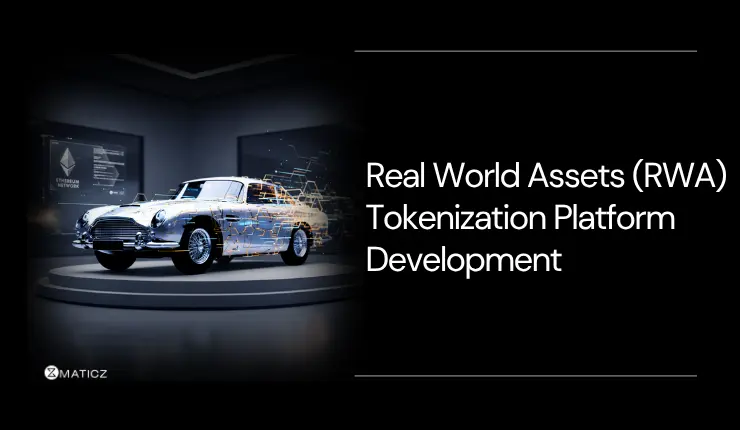
Real-world asset tokenization is becoming a major application of blockchain technology in 2026. It allows businesses to represent real-world assets such as real estate, commodities, bonds, private credit, funds, and other financial interests as digital tokens. This can make asset ownership and management more transparent, programmable, and accessible.
For businesses, an RWA tokenization platform can create new opportunities for asset issuance, fractional ownership, investor participation, portfolio management, and digital trading. However, building the platform requires more than creating a blockchain token. Smart contracts, legal structures, compliance systems, asset verification, custody, security, and investor management must work together. A well-designed platform can provide the infrastructure needed to bring traditional assets into a blockchain-based ecosystem while supporting long-term business growth.
An RWA tokenization platform is a blockchain-based system that converts ownership rights or economic interests in real-world assets into digital tokens. Maticz develops customized RWA tokenization platforms that support full or fractional asset ownership based on the legal and business structure.
For example, a real estate company can place a property into an appropriate legal structure and issue digital tokens representing defined rights connected to that property. We build the required tokenization infrastructure to help eligible investors purchase, hold, transfer, or redeem those tokens according to the platform rules.
A complete RWA platform normally includes asset onboarding, document management, token issuance, KYC/AML verification, wallet integration, investor dashboards, compliance controls, portfolio management, and reporting. We develop and integrate these core functionalities, along with advanced features such as secondary markets, oracle integration, AI analytics, and multi-chain functionality.
The objective is to create a complete digital infrastructure for issuing and managing real-world assets rather than simply launching a token. Our development approach focuses on building secure, scalable, and business-ready RWA infrastructure.
RWA tokenization can support several asset categories, depending on legal ownership, investor demand, liquidity, valuation, and regulatory requirements.
Real Estate: Commercial properties, residential buildings, hotels, rental properties, and development projects can be represented through tokenized ownership or economic interests. Fractionalization can potentially lower investment barriers for eligible investors.
Government and Corporate Bonds: Bonds and government securities can be represented digitally, allowing ownership records and settlement processes to be managed through blockchain infrastructure.
Private Credit: Loans, receivables, private credit funds, and other debt instruments can benefit from programmable payment and ownership records.
Commodities: Gold, silver, agricultural products, and other commodities can be connected with tokens through appropriate custody and verification systems.
Funds and Equities: Investment funds, shares, and other financial products can potentially be tokenized when permitted by applicable regulations.
Art and Collectibles: Artwork, luxury assets, vehicles, and collectibles can also be considered where ownership and custody can be reliably verified.
The technology stack determines the platform's performance, security, scalability, and ability to support future expansion.
The blockchain layer records token ownership and transactions. Ethereum and Ethereum-compatible networks such as Polygon, Arbitrum, Base, and Avalanche can be considered depending on the project's requirements.
The smart contract layer manages token issuance, transfers, ownership restrictions, distributions, and redemption rules.
For the backend, technologies such as Node.js, Python, or Java can manage APIs, user accounts, asset records, compliance workflows, and platform logic.
The frontend can be developed using React or Next.js to create investor dashboards, issuer portals, asset pages, and admin panels.
A database such as PostgreSQL or MongoDB can store off-chain information including user profiles, documents, KYC records, and asset data.
The platform can also integrate wallet infrastructure, oracle services, cloud hosting, encryption, monitoring tools, analytics, and security systems.
A professional RWA platform should provide functionality for asset issuers, investors, administrators, and compliance teams.
Asset Onboarding: Issuers can submit asset details, ownership documents, valuation reports, financial information, and legal records.
Asset Verification: Verification workflows can validate asset information through documents, third-party data, valuation providers, and custody records.
Token Issuance: Administrators can define token supply, pricing, ownership rights, distribution rules, and transfer conditions.
KYC/AML Verification: Investors can complete identity verification before accessing restricted asset offerings.
Investor Dashboard: Users can view available assets, token holdings, transaction history, distributions, and portfolio information.
Compliance Engine: The platform can support wallet whitelisting, investor eligibility, geographical restrictions, holding periods, and transfer controls.
Marketplace: Eligible token holders can access secondary trading where permitted by the applicable legal framework.
Admin Dashboard: Platform operators can manage users, assets, transactions, fees, compliance records, reports, and platform settings.
The development process should begin with business and legal planning before technical implementation.
1. Define the Business Model: Identify the asset category, target investors, operating market, revenue model, and investment structure. A platform designed for real estate may require different infrastructure from a private-credit platform.
2. Establish the Legal Structure: Determine what the token represents and how it connects to the underlying asset. Depending on the jurisdiction, an SPV, fund, trust, custodian, or other legal entity may be required.
3. Design the Architecture: Select the blockchain, token standard, database, wallet infrastructure, oracle system, compliance layer, and user interface.
4. Develop Smart Contracts: Build contracts for issuance, transfers, investor restrictions, distributions, and redemption.
5. Build the Platform: Develop the investor dashboard, issuer portal, admin panel, asset management system, APIs, and required integrations.
6. Add Compliance: Integrate KYC, AML, investor eligibility, monitoring, and transfer restrictions.
7. Test and Audit: Perform functional testing, security testing, performance testing, and smart contract audits.
8. Launch and Maintain: Deploy the platform and continuously monitor security, performance, compliance, and user activity.
Smart contracts provide the programmable foundation of an RWA platform. Maticz develops smart contract solutions that define token ownership, transfer conditions, distribution rules, investor eligibility, and compliance requirements.
ERC-20 can be used for fungible token models, while ERC-721 supports unique assets and ERC-1155 supports multiple token types. For regulated RWA products, we integrate additional compliance functionality based on the project's requirements.
Permissioned standards such as ERC-3643 can support tokenization models where investor identity and eligibility are important. Our solutions can restrict transfers to approved participants and enforce compliance rules at the token level.
The correct standard depends on the asset type, legal structure, investor requirements, transfer restrictions, and blockchain network. We design, develop, test, and audit smart contracts with security-focused architecture before deployment for real assets or significant investor funds.
Blockchain selection affects transaction costs, scalability, security, interoperability, liquidity, and user experience.
Ethereum provides a mature ecosystem, extensive developer infrastructure, and strong institutional familiarity. Polygon can be considered for applications requiring Ethereum compatibility with potentially lower transaction costs.
Arbitrum and Base offer scalable Ethereum-compatible environments. Avalanche can be considered when businesses require flexible blockchain infrastructure and customized environments.
For larger businesses, multi-chain infrastructure may become important because investors and assets can operate across different networks.
The right blockchain should therefore be selected based on transaction volume, asset type, compliance requirements, investor geography, wallet support, security, liquidity, interoperability, and long-term scalability rather than transaction fees alone.
Regulation is a critical part of RWA platform development. A token may represent a security, debt instrument, fund interest, ownership right, commodity exposure, or another financial interest. Its classification depends on the legal structure and jurisdiction.
Businesses may need to consider KYC, AML, securities regulations, licensing, custody, taxation, investor eligibility, reporting, data protection, and transfer restrictions.
The legal relationship between the underlying asset and token holder should be clearly documented. For example, only verified investors may be allowed to purchase certain tokens, while smart contracts can prevent transfers to unauthorized wallets.
Compliance should be incorporated into the platform architecture from the beginning. Since RWA regulations vary between jurisdictions and continue to evolve, businesses should obtain professional legal and compliance advice before launching an offering.
The development cost depends on platform complexity, asset type, blockchain selection, compliance requirements, integrations, and security needs. A basic RWA MVP with asset onboarding, token issuance, wallet integration, investor dashboard, and administration features may cost around $40,000–$80,000.
A medium-complexity platform with custom smart contracts, compliance automation, advanced asset management, analytics, and multiple integrations may cost approximately $80,000–$150,000. An enterprise-grade platform with multi-chain support, institutional custody, secondary-market infrastructure, advanced compliance, AI capabilities, oracle integrations, and extensive security can cost $150,000–$250,000+.
The final budget depends on the required features, technical architecture, asset model, integrations, and regulatory scope. We develop customized RWA tokenization platforms with the required blockchain infrastructure, smart contracts, compliance layers, integrations, security, and advanced features based on each business's specific requirements.
Several factors influence the final development investment.
Asset Type: Different assets require different ownership, valuation, custody, and compliance workflows.
Platform Complexity: Additional dashboards, automation, APIs, and management tools increase development effort.
Smart Contract Logic: Advanced transfer restrictions, distributions, redemption, and investor eligibility require more development and testing.
Blockchain Support: Multi-chain deployment requires additional integration, testing, and maintenance.
Compliance: KYC, AML, investor verification, transaction monitoring, and reporting increase the technical scope.
Custody: Institutional custody and secure key management can add infrastructure and integration costs.
Marketplace: Secondary trading requires additional order management, settlement, liquidity, and compliance systems.
AI Integration: AI-powered document processing, risk analytics, investor intelligence, and asset monitoring can increase both development and infrastructure costs.
The development timeline depends on the platform's complexity and the number of integrations. We offer customized RWA tokenization platform development based on your business requirements and project scope.
We build MVPs, medium-complexity platforms, and enterprise-grade RWA platforms with advanced features such as compliance, multi-chain functionality, custody, AI, and marketplace integration.
We handle the complete development process, including business analysis, legal planning, UI/UX design, architecture, smart contract development, backend and frontend development, blockchain integration, compliance integration, testing, auditing, deployment, and maintenance.
We develop platforms with core features such as asset onboarding, token issuance, investor verification, and portfolio management, while advanced capabilities such as secondary trading, AI analytics, and multi-chain support can be integrated based on your business requirements.
With Maticz Technologies, businesses can build a secure, scalable, and market-ready RWA tokenization platform designed for long-term growth.
AI is becoming a useful technology layer for RWA platforms by improving automation, analytics, and operational efficiency.
AI Document Processing can extract information from contracts, invoices, property documents, financial statements, and valuation reports, reducing manual data entry.
Risk Analytics can analyze asset and market information to identify potential risk indicators and support monitoring.
Investor Intelligence can generate portfolio summaries, asset comparisons, and personalized insights.
Compliance Monitoring can identify unusual transaction patterns and prioritize activities for human review.
Asset Monitoring can help track market information, valuations, performance indicators, and changes affecting tokenized assets.
Combining AI with blockchain can create more efficient RWA infrastructure. Blockchain provides transparent ownership and transaction records, while AI can analyze large volumes of information and support decision-making. Human oversight remains essential for legal, financial, investment, and compliance decisions.
Maticz can help businesses develop customized RWA tokenization platforms based on their asset category, business model, target market, and technical requirements.
The development scope can include RWA tokenization architecture, smart contract development, blockchain integration, investor dashboards, wallet integration, asset management, compliance modules, marketplace functionality, AI-powered features, and security testing.
A customized platform gives businesses greater control over branding, token structure, asset onboarding, investor workflows, compliance processes, and future expansion.
The project can begin with business requirement analysis and technical architecture planning. Based on these requirements, the development team can define the appropriate blockchain, token standard, feature set, integrations, timeline, and estimated investment.
For businesses entering the RWA market, a purpose-built platform can provide the infrastructure required to issue, manage, and distribute tokenized assets while creating opportunities to expand into new asset classes and markets.
RWA tokenization development is becoming an important development area for businesses looking to connect traditional assets with blockchain infrastructure. Real estate, government securities, private credit, commodities, funds, and other assets can potentially benefit from digital ownership, programmable transactions, fractional investment, and improved operational efficiency.
We offer end-to-end RWA tokenization platform development tailored to business needs. We build secure, scalable platforms with blockchain infrastructure, smart contracts, compliance, asset verification, investor management, and AI-powered automation. Our solutions help businesses launch and scale tokenized asset platforms with the right technology and infrastructure for the growing RWA market.
Share Posts
Tap Into the Future
The latest insights, posts, and project updates - straight to your inbox.
Have a Project Idea?
Discuss With Us
✖








Connect With Us
.webp)